Color Soap Naturally Series

Although I love making bright and colorful soap using micas, pigments, Lab Colors and other synthetic colorants, ever since I started making soap I’ve been drawn to using natural colorants in soap making.  To me there is a romantic notion that soap can be colored using natural herbs, spices and clays.

And if you sell soap…you probably know that consumers love the word “natural”.  Using botanicals and other natural colorants sounds great on a label.  “Colored naturally using alkanet and annatto seed herbal powders” sounds much better than “colored with Mica, Titanium Dioxide, iron oxide and Ferric Ammonium Ferrocyanide”.  

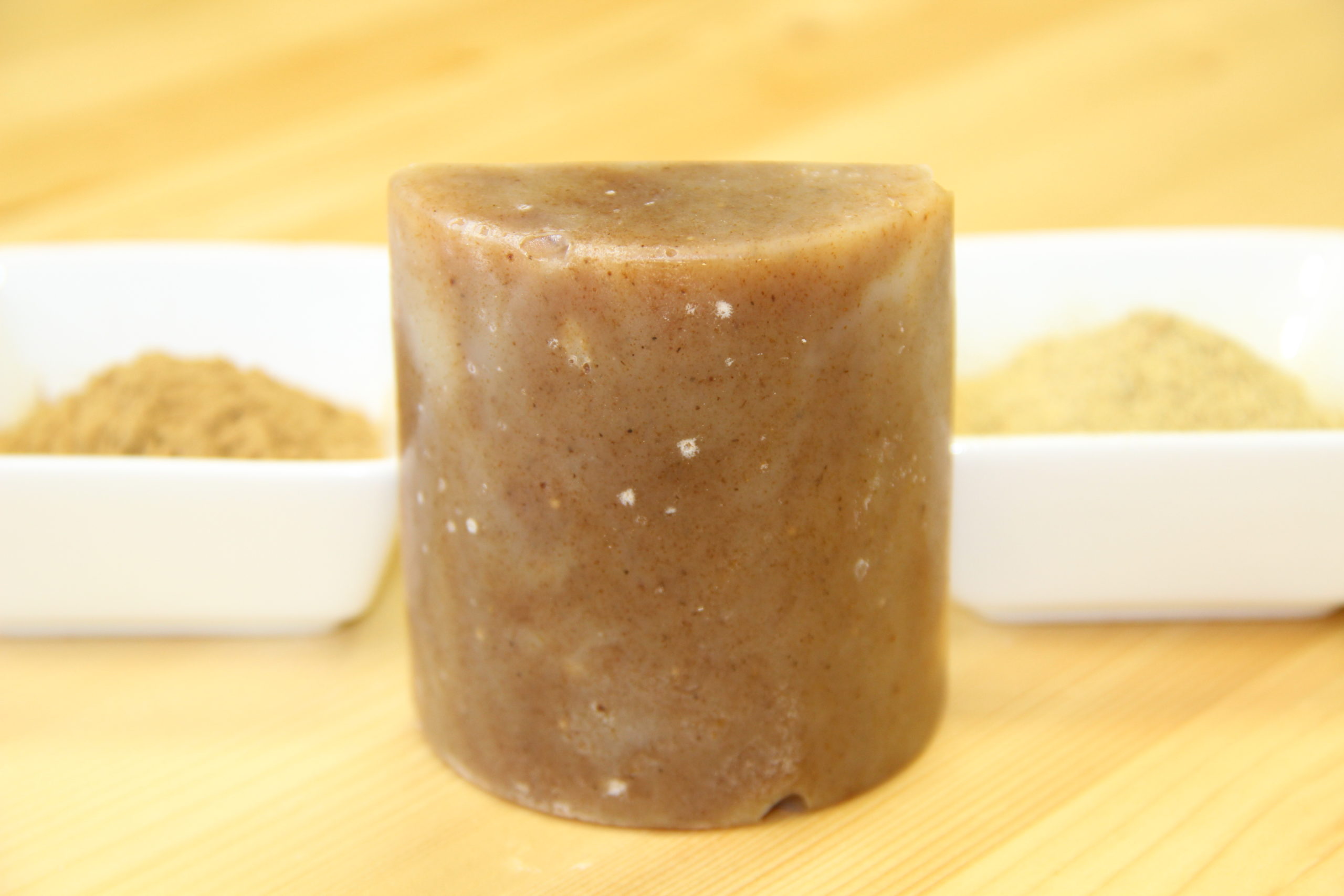
Over the past year and a half I’ve been experimenting with herbal powders, spices and clays and want to share my results with you.  We’ll start the series off today with how to test herbal and spice powders for pH stability and also how to make herbal infusions. 

Guest Post on Soapqueen.com – Gnomes!

Once I saw the Gnome Mold at Bramble Berry I knew I had to have it.  Gnomes are in right now.  You see them popping up on Etsy and if you have kids you might have seen the movie Gnomeo and Juliet.  I wanted to give the gnomes detail and color so I thought Water Soluble Paper would be the perfect way to do that.

Head on over to Soap Queen to see the rest of the tutorial.  Be sure to leave a comment!   Thanks!

Cold Process Soapmaking – Lye storage

I recently had a past student ask for help in figuring out some issues they were having with their CP soap.  The last couple of batches had come out more greasy and oily than usual and seemd to be overly superfated.  She made sure her measurements were correct (using two scales).  She hadn’t started using any new ingredients or batches of oil.  I drilled her about this and that and finally asked how she stored her lye.  She kept her lye in a bucket from the supplier.  She was now down to the bottom of the bucket.  I told her to soap using a fresh bucket of lye and her soap came out perfect!

What I suspect is since her lye was stored in a bucket (not in a plastic bag) each time she opened the container and put the lid back on she was letting in fresh air with moisture that the lye was absorbing.  She did have a bit of clumping which was a big clue.  So she was soaping with lye that had absorbed moisture therefore greatly increasing her superfat.  The solution?  Keep your lye stored in plastic bags with the air squeezed out.  Here’s what I do. 

I get the lye from a supplier and make a batch or two of soap. 


Pour the lye into a baggy and roll up nice and tight squeezing the air out.

Rinse out the container and store the bagged lye in it.

If you’re a big time soapmaker…going through several containers of lye a week then you probably don’t have to worry about this.  But if your lye sits around for a bit between use…make sure you aren’t storing away air when you store your lye.   

Happy Soaping!

-Amanda

The Secret Life of Soap – Kevin Dunn at the 2011 HSMG Conference

Hands down…the seminar I enjoyed most at the 2011 Handcrafted Soapmakers Seminar was The Secret Life of Soap by Kevin Dunn.

Kevin Dunn is the Elliott Professor of Chemistry at Hampden-Sydney College.  Professor Dunn has undertaken a series of research projects on the chemistry of handcrafted soap.

It was refreshing and exhilarating to hear a seminar on soap making that involved deeper explanations of the chemistry of soap making that was not only entertaining but easy to understand!

One of my favorite things about Professor Dunn is his ability to make us non-chemist types understand the findings from his research.  In his seminar he used an entertaining story of cheerleaders and nerds (which I thought was brilliant) to compare the reaction of oils and water.  You didn’t have to have a chemistry background or even the knowledge of chemistry jargon to follow along.

Some of the interesting topics he discussed:

Soda Ash

Soda ash (commonly referred to as ash) is a pesky little problem that just about every soap maker has encountered at one time or another.  You put your soap to bed…wake up in the morning and there is a powdery layer of “something” blanketing the surface of your soap.

What is that “something?”  Professor Dunn explained to us that it is sodium carbonate.  Sodium carbonate forms where lye meets air.  We know it is sodium carbonate if it is soluble in water (you can rinse it off) and it completely covers the surface of the soap that is exposed to air.  If you have white dots or streaks, especially below the surface of your soap, these are usually something else and not ash.

How do we prevent it?

Cover your soaps with wax paper or plastic wrap to keep the air from “touching” your soap surface as it saponifies.

Do not uncover or unmold your soap until it is “tongue neutral.”  This is especially important to remember when you are doing un-gelled soap.  In my experience un-gelled soap takes longer to complete the process of saponification than gelled soap and can sometimes remain “zappy” 12-24 hours (sometimes more) longer than the same recipe when gelled.  Once saponification if complete (no zap) you are usually safe from the ash monster.

If we get it, how do we remove it?

Since ash is just an aesthetic issue we can remove it from the bar of soap to “fix” the problem.  You can do this by rinsing off with water either by putting it under running water or by rubbing it off with a cloth.  If my soap bars have a flat enough surface I like using a vegetable peeler to remove the ashy surface.

Another exciting thing we learned?  Cetyl alcohol is a great substitute for jojoba oil.  Jojoba prices have been sky rocketing lately and it’s hard to even find jojoba from some of our favorite suppliers.  He sought out a replacement at the urging from Mike from Columbus Foods.  His result was cetyl alcohol (+ other fatty alcohols and waxes).

He also shared that during his research (actually making soap with cetyl alcohol) he found that soap made with cetyl alcohol helped to sustain the soap’s lather.  Of course I immediately thought of a shaving soap!  So this is definitely on my list of things to try.  (If you want to try it out…start with 5% and go from there.  Cetyl alcohol does not have a sap value so add it as you do beeswax and other general additives.)

What is cetyl alcohol?

Cetyl alcohol is a saturated, fatty alcohol with similar properties to those of stearic acid.  Even though it’s called an alcohol…its physical characteristics resemble that of a wax.  Cetyl alcohol is generally derived from petroleum or vegetable oils (coconut or palm).  Your supplier should be able to tell you if their cetyl alcohol is derived from petroleum or vegetable oils.  Since cetyl alcohol is saturated…it has a stable shelf life (something we consider when choosing ingredients for making soap).

He covered many more topics in the seminar.  If you missed it…don’t fret.  You can always get his book Scientific Soapmaking.  I ordered this book when it first came out and it has proved to be a wonderful resource providing answers to my soap making chemistry questions.  It also gets me to think outside of the traditional soap making box.  You can find more information about Kevin Dunn and his book at www.scientificsoapmaking.com.

I’m not sure why Kevin Dunn has chosen the topic of handcrafted soap to focus a bit of his research and time on.  I wonder if it has anything to do with the swarm of women he had flocking around him at the conference!  :)   Whatever the reason…I’m so happy he has done the research and generously shared the results with the soaping community.

And yep…I got to give him one of my shirts I have printed!  Thanks for a wonderful seminar,

-Amanda

The Column Swirl

Soapylove, Debbie Chialtas, posted a really cool video on her Facebook pageCheck it out.  They of course are using paint…but I see soap!  I had to give it a try!  So here it is…

Recipe (so I remember):  12 oz coconut, 8 oz olive, 7 oz palm, 2 oz jojoba, 1 oz castor


Doh!  I kind of ruined it with a skewer.  Now it looks like a regular funnel swirl.  Lol.  I guess I was just worried that when you break it down into individual bars that there wouldn’t be enough interest in each bar. 

A very cool effect! I’m going to play with it some more.

Thanks, Debbie!
Amanda

Castile

for Celine :)

You either hate it or you love it.  Castile.  I used to be on the “hate it” team.  But I never tried an aged…well cured bar of castile.  Now I’m on the “love it” team!

To me castile means a soap made out of olive oil only (+lye and water).  I know to some…castile is a soap made with “mostly” olive oil and can contain other vegetable oils.  I make my castile with no added color or fragrance.  It’s just a beautiful cream colored bar of soap.  I let mine cure for at least four months. 

Let’s make some castile. 

The recipe is simple.  100% olive oil.  So determine how many ounces of oils your mold holds and go with that.  My mold holds 48 oz of oil.  I like to do a 5% superfat with castile so that will give me 6.2 oz lye for 48 oz of oil.  I take a steeeeeeeep water discount when making castile.  I usually do equal amounts of water and lye.  Since my recipe calls for 6.2 oz of lye, I’ll use 6.2 oz of water. 

*Please note that doing such a high water discount makes your lye solution much more potent and dangerous if splashed on you.  Wear gloves, goggles, shoes and long sleeves to help protect against splashes.  Since your solution if much more concentrated make sure that the lye crystals are completely dissolved before adding to your oils.     

For all my soaps I use Bertolli (regular) olive oil.  I’ve never used any other type of olive oil so can’t comment on how different types of olive oil behave differently.  Olive oil is traditionaly slow to trace but with such a steep water discount…it won’t take long at all to trace. 

To start.  Make your lye solution.  Let it cool down a bit.  I usually determine mine ready when it is warm to the touch.  (Not hot and not room temp.  Sorry, I don’t take temps!)   

Measure out your olive oil.  I leave it at room temp…I don’t worry about heating it up or making it the same temp as the lye solution.

Add your lye solution carefully to the olive oil.  Be careful with splashes! 

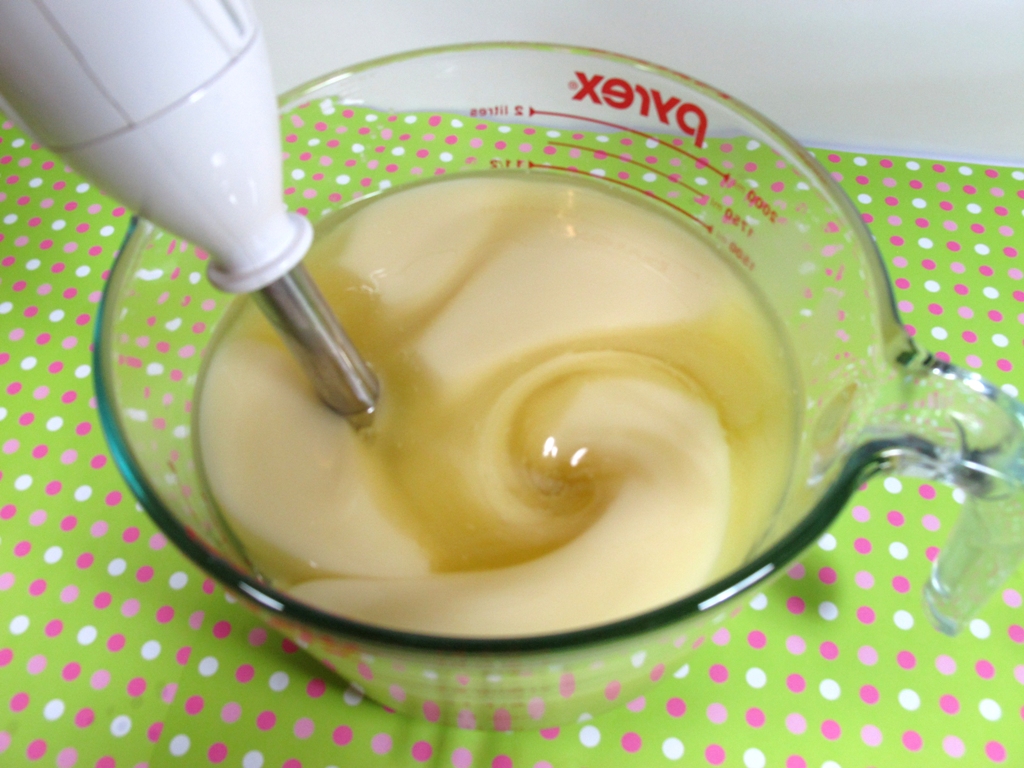
Stickblend until your soap reaches trace.

I like to let it sit for a minute or two before pouring it into the mold.  Olive oil can sometimes seem like it is well emulsified and then all of the sudden separate.  So after you think you’ve reached trace…let it sit for a minute.  It’s not going to thicken up or sieze on you so you can take your time to make sure it’s properly mixed.  I love reaching trace and then lazily mixing by hand with a spatula.  It’s a bit soothing and somewhat hypnotic.  :)

Pour it into your mold.

Cover and insulate as usual.  Since we’re using such a high water discount…your soap will probably not gel.  No worries though…this soap is rock hard after about 2 days in the mold.  Normally we think…high olive- must not cut right away.  But you’ll find that this is super hard after a day or two and ready to cut.

Be sure to cure your castile in a cool dry place without the bars touching (as that can trap moisture).  Cure them for at least four months.  The longer the better! 

So…if you haven’t given castile a try…give it a go!  Or maybe you’ve tried it and hated it.  Try it again!  The high water discount and a long cure make for a really nice bar of soap.

Good luck!

-Amanda

Funnel swirl / coat hanger swirl

This is a technique I’ve been working on.  You simply do a funnel swirl and then pull a coat hanger side to side while pulling up.  The coat hanger skews and pulls the concentric rings from your funnel swirl and makes a really cool effect.  I’m still working on it.  The above soap has a bit too much color and not really enough contrast in the colors.  But here’s how you do it…

Make your soap mixture as usual.  You’ll want to use a slow tracing recipe so you have time to divide out your colors and pour through the funnel.  I mix just until a steady emulsion is formed.  I don’t want to see trace. 

Once your lye solution and oils are emulsified, divide out into your coloring cups.  It is totally up to you how many you do.  I leave a bit of white for the middle. 

Hand stir in your colorants.   If you use a stick blender they might get too thick. 

Once the colors are mixed well you can add your fragrance oil/ essential oil to the individual colors.  I add it now instead of at the beginning because we don’t want it to thicken the soap while we’re mixing in the colorants.  Be sure to use a fragrance oil that doesn’t accelerate your mix.  I used one of my favorite essential blends of lavender and anise.

Using a funnel held over your mold pour in a bit of each color.  I made about 3 or 4 rounds of each color. 

I like to finish it off by pouring the last of my uncolored mixture down the center. 

Once you have all of your soap poured you’ll take a clothes hanger (bent to fit the width of your mold) and use it to swirl.  Start by putting it down to the bottom of your soap on one side…then sweep from side to side as you pull it up and out of the mold. 

Then if you want you can swirl the top on the surface.  I added a bit more purple and yellow and swirled with a craft stick.

I’ll give it another go…using less color and more contrast.  

Happy Soaping!

Amanda

Advanced CP Soap Class

I had a great advanced soap class on Saturday.  This class focuses on advanced design techniques.  I first demo several different techniques then the students get turned loose to make their own soap.  They each make 1 funnel swirl loaf, 1 slab swirl and 1 layered soap loaf with a mica line and embeds.  I think they did an excellent job! 

2 new logs

First, I have to say THANK YOU to all that have bought my E-Zine!  And for the wonderful and kind emails/comments I’ve been getting.  I really appreciate all of you!  :)

I made a couple of logs of soap yesterday for some friends.

Neither of these came out very exciting.  I did an in the pot swirl for both but the colors didn’t hold well.  I used some micas I hadn’t used before and I guess they weren’t very stable or I didn’t use enough.

Anywho…the soap on the left smells awesome!  It is a mix of 2 parts Bramble Berry Sheer Fresia, 1 part BB Mangosteen and 1 part BB Rain Cybilla.  (All samples I had received in various orders/swap.) 

The other log was Kumquat from Taylored Concepts.  It was very different than other Kumquats I have used.  It almost seemed to smell like bubble gum.  This soap is for some friends with kids…so I know they’ll be happy when they get it. 

Sorry my pictures aren’t that great.  This yellow table I have just isn’t the best background for pics.  Usually I use a brown table cloth but I had a transparent crock pot soap volcano all over it the night before  and I’m having trouble deciding how to wash it.  I think there is too much sticky soap on it to throw it in the washing machine so I should probably throw it in the tub first to soak it. 

I also tried out a new recipe.  It’s similar to another one I love but has more shea and some palm kernel.  Because of all the solid oils/butter it does get thick fast. 

Olive oil – 8 oz
Palm oil – 8 oz
Coconut oil – 6 oz
Palm Kernel oil – 4 oz
Shea butter – 6 oz
Avocado oil – 2 oz
Castor oil – 2 oz

Water – 11 oz
Sodium hydroxide – 4.8 oz 

Today is like Christmas for me.  I’m anxiously awaiting a delivery of a new soap mold which should deliver tonite!  I can’t wait to play with it over the weekend.  I’m sure I’ll have plenty of posts coming up about using it.  :)

Happy Soaping!

Amanda