Beauty in Haiti Workshop – Jan 2013

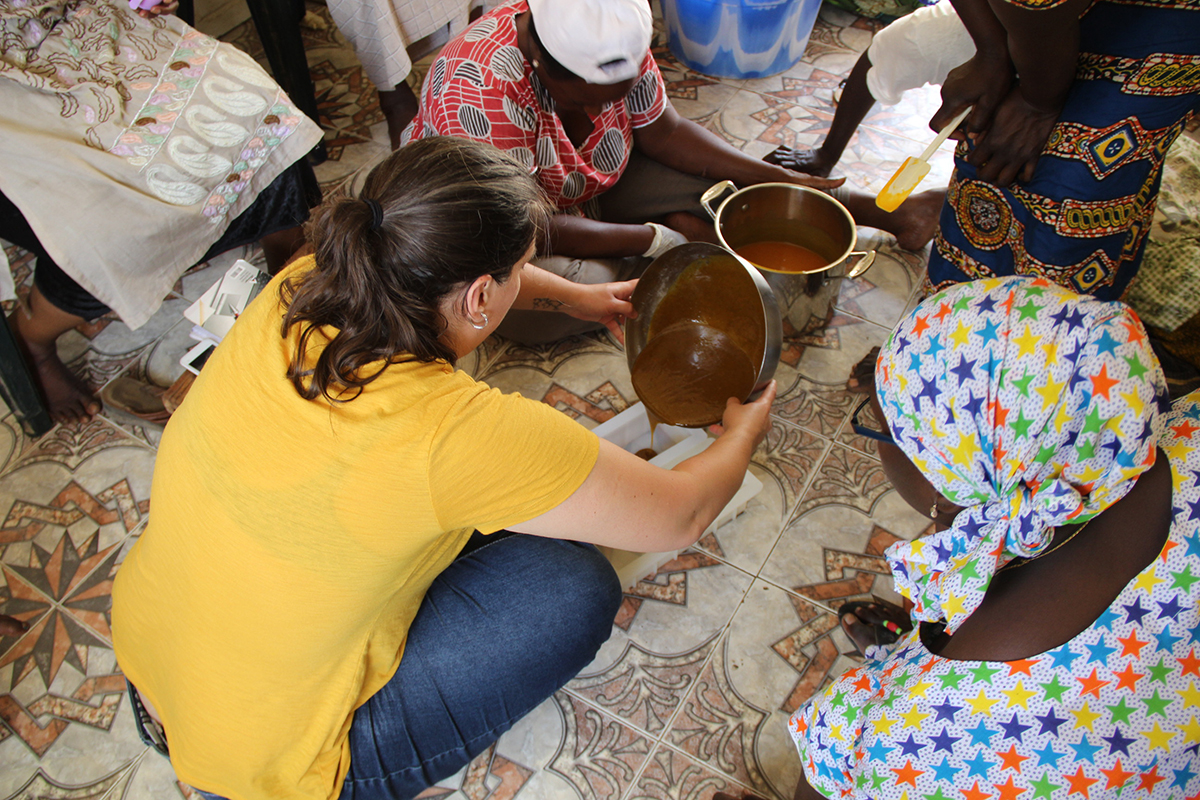
Marla Bosworth and I just got back from Haiti where we taught the first Beauty in Haiti workshop to the women of OFEDA. We taught workshops on both Saturday and Sunday.

Haiti is beautiful country of extremes. Driving everywhere you can see the rubble and destruction from the 2010 earthquake. Amid the destruction, piles of rocks, tent cities and damaged building are bright splashes and collections of color. Beautiful works of art – paintings, metal art, jewelry – dot the sides of the road. Markets cover the sidewalks with vendors selling fruits, vegetables and other goods. The beauty of the art and colorful fruits and vegetables almost over shine the rubble lining the streets and the collapsed backdrop of buildings.

We had many goals for this trip but basically we wanted to teach the process…one which blends well with their environment (tent camp – no running water or electricity), show them that this is something they can do, source ingredients locally by meeting with Haitian oil/chemical distributors and talk to the women about setting up a business. We were successful with all of our goals for this initial trip. The women are confident in the process and know they can do it. They still have a lot to learn but it was a good start. We met with local business to source supplies including sodium hydroxide, a vetiver distiller and have some leads for bulk oils. When we left we bought some of the soap from the women that we had made to show them that this is something they can make money from.

This trip was a great start but there is still much to do. We do plan on going back. The next trip will involve making more soap, making solid perfumes and firming up the process and procedures that the women will be using and finalizing suppliers in Haiti. We are still raising money through our IndieGogo campaign.

I want to give a big thank you to those that have donated to our project. Thank you to Bramble Berry who donated all of the soap molds, oils, cutters and scales. We told the women that there was a community of soap makers back home that had helped to make these workshops happen and they couldn’t believe it. They just couldn’t believe that people that lived so far away would care enough to make this happen.

Our first workshop was on January 12, the three year anniversary of the devastating earthquake. I don’t even know how to put into words the emotions on this day. Stories were told. That day effected every single person. Every single person lost somebody. The women came to the workshop still excited and happy that we were there. I think it gave them something to take their minds off of what day it was.

Here are some videos and images from the trip. The videos are my favorite. We had told the women to be joyful when making the products and that the joy would be in the finished product. Mostly, we wanted them to have fun. And so they did!

Calculating your water amount for soapmaking

water in soapmaking

I get questions all the time about how I come up with my water amounts. I do not use a lye calc to get my water amounts. I simply use a lye calc to get the correct amount of lye to use.

My standard water used is equal to 2 times the lye. So if a recipe calls for 12 oz lye, I will use 24 oz water. This is even true for advanced swirling recipes. You hear a lot “use full water for fancy swirls so that you have time to play”. I create my slow moving recipes with special mind to the oils more than the water amount.

I can’t stand unmolding soap the next day and for it to be softer than play dough. (This is what you get when using a water:lye ratio of 3:1 or 4:1 plus soft oils such as olive that contribute to a slow moving recipe.)

For recipes high in olive oil and other soft oils (50%+) I will use a water amount equal to 1.5 times my lye. Why?

High olive oil recipes are longer to trace, softer initially upon unmolding and typically take longer to cure. Discounting the water helps with all of these issues. It speeds up trace (though still allows plenty of time to design the soap), makes a harder bar for unmolding and reduces the cure time.

When I am doing a 90-100% castile or bastile type of soap I will actually use 1.1 times my lye. So if a recipe calls for 8 oz lye, I will use 8.8 oz of water.

You should never use less than 1.1 times your lye. Lye needs at least an equal amount of water to form a solution. If you use less water the lye will actually fall out of solution and you will not have properly dissolved lye. I typically add the .1 amount to just give myself a bit of a buffer.

Take care when working with a higher concentrated solution. Your soap will move faster, your solution is stronger which means it could burn fast/worse and keep an eye on it when you initially make it as it heats up faster and hotter.

I prefer ratios and I prefer simplicity. 2 times lye, 1.5 times lye and 1.1 times lye are really easy to remember and figure out.

The amount of water you use is simply a personal decision. There really isn’t a right or wrong but it can effect the way a recipe moves, sets up and cures out.

-Amanda

Beauty in Haiti


BANNER


In January, Marla Bosworth and I are traveling to Haiti!  We will be teaching a group of 24 women over two days how to make soap and other beauty products including natural hair care! Their goal is to start a business to help raise funds to support themselves and their community.

Who We’re Helping

There is a group of women in Haiti, near Port Au Prince, located in a government-owned tent camp whose lives were torn apart in January 2010 after the country’s disastrous earthquake. These women are known as OFEDA (Organisation des Femmes Devouees en Action). They are a unique and independent women’s group founded after Haiti’s disastrous earthquake.

The women, who range in age from 18 to 82 years old, came together for the first time in January 2010 soon after the earthquake. They began meeting under a tree in the tent camp to support and encourage each other with hope and possibility.

These women have a dream, and we want to help them achieve it. By starting businesses together (their first being a handmade greeting card company), they hope to find a way out of the tent camps to reclaim their lives and to continue moving forward with dignity and security.

We need your help so that we can teach the OFEDA women how to make handmade soaps and natural haircare products to sell through a series of hands-on workshops in January 2013.

Please visit our campaign page!


Thank you for your support!

-Amanda

Flowers on Cold Process Soap

Original flower design tutorial here…

Here is how to create flowers on top of your cold process soap.  You’ll need a slow moving cold process soap recipe, squirt bottles and skewers.

The recipe:
Sweet Almond oil – 1.25 oz
Coconut oil – 12.5 oz
Olive oil – 10 oz
Rice Bran oil – 3.5 oz
Shea butter – 2.75 oz
Sunflower oil – 2 oz
Lye – 4.6 oz
Water – 7 oz

Bring your soap to a steady emulsion. You want it to be nice and thin to have time to separate and color your soap.  Divide out your soap for the base and the individual colors.  Put the colors into squirt bottles.  Here is the basic design process inside a single mold but you can do this across the surface of a slab mold as well.

Pour the base into your mold.  Using the squirt bottles, draw a circle onto the surface.  With another color, draw a circle inside of the first circle.  Do this until you have about four rings as shown below.

Next, put the skewer into the soap on the outside of the circles and drag to the center. Pull the skewer out, wipe it and do this three or four more times to create the petals.

This is a great flower!  You can leave it as it is or you can pull the petals out to make pointy petals.

Insert the skewer into the middle of the flower.  Pull the skewer through the middle of the petal to the outside.  This will pull the point out as far as you like.

So easy to do! You could even have a little yellow in a squirt bottle to dot in the middle as pollen if you wanted. Here are some flowers spread out over a slab.

Creating Custom Colors using Oxides and Ultramarines – Color Palette 1

One of my favorite things to do as a soap maker is to mix colors! I’m by no means an expert but I wanted to share how I mix, test and use colors. In this post we’ll focus on oxides and ultramarines. Oxides and ultramarines are my favorite type of colorants to use because they are stable, easy to predict (what you see is usually what you get) and they don’t usually fade, bleed or cause other issues. The only problem I’ve had with them is using too much and having it come off on a wash rag…especially reds. So I’m going to show you my process for coming up with and testing new color combos.

During this tutorial I only use yellow oxide, brick red oxide and ultramarine blue. That gives us our base colors of red, blue and yellow which we can mix to create a rainbow of colors. It’s good to have a little color theory knowledge. I might go into that in a future post but for now do a little research on color theory and paint mixing and you’ll find some great info online.

First we need to setup our base colors. People color mix two ways. They simply mix dry powders or they wet/suspend them and then mix them. I prefer mixing wet. I just think it’s easier to see what you’re going to get and to also add additional parts of a color if needed. I simply mix about 8 tablespoons of glycerin with 2 tablespoon of pigment. I didn’t have glycerin today but used sunflower as it’s a nice light oil. You can even do 4 tablespoons glycerin to 2 tablespoons pigment; just a matter of preference. Give these a good mix. I love using the little frothers. I buy mine at Ikea but I think Bramble Berry might sell them also. The pigment will start to sink down if left alone too long so always give it a good mix before you start measuring them out into the little cups to color mix.

Now for the fun part! Its time to mix colors!  I like to mix colors in the little plastic bathroom cups. I use teaspoons and keep track of “parts” so the color recipe is easily scaled up or down. For example if I want to mix a purple, I will measure 3 teaspoons of blue and 3 teaspoons of red into a little cup. These are equal parts so the color recipe is 1 part red and 1 part blue. Be sure to keep track of the parts; I like to write on the cups with a marker to keep track.

Where do you start? Some simple and common combos are blue and yellow to make green or blue and red to make purple. I start with equal parts and then go up or down to create different hues.

For example, take a look at the colors below. The one on the left is 1 part blue and 1 part red. The one on the right is 5 parts red and 2 parts blue. Usually I would have flipped that and done a 2 parts red and 5 parts blue…but I didn’t this time. You can be methodical or just throw parts into a cup to see what you come up with! Have fun with it!

To get a better idea of the color you can dab a little onto a paper towel.

Once I get the colors where I want them, I test them in MP. This gives me a better idea of how it will come out. My soap recipe is not as white as MP but it is pretty white. You can skip testing it in MP if you want. I just prefer too.  Here you can see I’ve tested them in MP.

Then it’s time to test in CP. Use your standard recipe. Please note that the colors of your oils will affect the colors you end up with. My recipes tend to be pretty white, barely creamy. Some people use olive oils that have a green tint to them. This is why it is important to test. I usually test about 5 colors at a time so I make a 1 pound test recipe. I use a silicone muffin pan as a mold. I also like to see what the color difference will be between ungelled and gelled soap. Gelled soap seems to be more vivid and slightly darker. So I use a heating pad to force gel on the muffin pan and I’ll pour little sample sized amounts into a brownie pan which will not gel. This way I can see the color difference between gelled and ungelled…simply a matter of preference.

I’ll also test them to see if the lather is colored. If it is…I’ll know to use less next time. Usually I only have this issue with reds.

So here are some color recipes that turned out great.

From left to right:

(1) Green – 1 part ultramarine blue / 4 parts yellow oxide
(2) Blue – 3 parts ultramarine blue / 1 part yellow oxide
(3) Purple – 1 part ultramarine blue / 1 part brick red oxide
(4) Maroon – 5 parts brick red oxide / 2 parts ultramarine blue
(5) Orange – 2 parts brick red oxide / 4 parts yellow oxide
(6) No color

(Ignore all of the ugly bubble marks in the pic above.  I mixed using the frother and that just added tons of bubbles.)

I went a little heavy handed with the colorants.  I used about 1 teaspoon of the mixed color per 4 oz of raw soap.  I kinda thought the maroon would bleed/have colored lather but it actually didn’t.  See below.

Once you find color combos that you like…you can make up bigger batches of them and keep them in bottles already mixed and ready to go.

Do you have any oxide/ultramarine combos that you really like?  If so…let us know so we can give them a go!

-Amanda

2012 Alabama Soap Conference!

WOW!!! A great time was had at the 2012 Alabama Soap Conference!

Keynote Speaker, Marla Bosworth, kicked off the conference with her “Spotlighting U” talk. Marla is probably one of my favorite speakers in the industry. I first heard her at the Miami HSMG conference with her seminar on wholesaling. I gleaned so much information from that seminar; I was truly impressed by her knowledge and her willingness to so freely share that knowledge.

Next up was me! I did a demo on how to make single cavity silicone soap molds! I couldn’t have done it without my partner in crime…I mean all things soap…Holly Port of Lotion Bar Cafe.

Holly and I had a ton of behind the scenes fun practicing for each demo in our hotel room! The hotel we stayed at was great and the front desk guy was awesome! He hooked us up with a table, a knife, a roll of tape, a glass of milk…whatever we asked for…he found it for us!  And he didn’t ask questions!  Haha. 


Michelle Rhoades from Mossy Creek Soap was next. She gave a presentation on “Finding Your Soap Personality with Creative Packaging!” What a great presentation! This was her first big speaking engagement and she did great! She had several samples of creative soap packaging. Some of the things I never would have thought of…including using gauze to wrap soap!

Next up was Tammy Doering, AKA The Mud Queen! She showed us how she makes her Dead Sea Lavender and Emu Facial Bar! She also hosted a spa night in her hotel room where everyone got a little mud on their face! It was a blast!

Here’s Marla and Holly at the spa party!

Elizabeth Hill gave a great talk on creating products from stuff you have in your kitchen. She made a fantastic scrub out of honey, grits/cornmeal and yogurt! I couldn’t believe how great it felt! And with such simple ingredients. She hosts spa parties where she goes to peoples houses and makes these simple products.

Next up was Theda Gatlin. Theda showed us how to make Hand-Dipped beeswax Candles. I love this demo! She had the most beautiful candles on display.

Day two was another fantastic day. Marla kicked this day off with a demo on formulating lotions and creams.

Sandi Garrett Little showed us how to make massage candles! I didn’t realize how easy they were to make so I’ll be making some soon!

I think one of my favorite presentations was Mono-Fat Soap by Deborah Bruijn. She made several different single oil soaps and brought them so that we could try each of them out! She also talked about the different types of oils and what properties they contribute to our soaps.

Then it was my turn again to demo the Peacock Swirl!

T.A. Helton closed the conference down by showing us how to make Firestarters! They are so easy to make and turn out absolutely beautiful with the white wax!

I had a blast! You can’t beat the friendliness and hospitality of this group. Thank you so much T.A and Sandi for inviting me out to the conference!

Thank you to all of the wonderful sponsors who contributed to the goody bags or provided awesome prizes! 

If you missed it this year…be sure to make it next year! This conference is definately worth traveling to if you don’t live locally.

www.alabamasoapmeeting.com

Color Soap Naturally – Calendula and Paprika, Layers and Swirls

This is an advanced soap design using natural colorants.  It includes calendula and paprika for color and texture and swirling and layering techniques.  I’ll also show you how to do the thin cocoa line you can see between layers.

Bring your soap to a stable emulsion.  You don’t want to see trace or you won’t have enough time to separate out your colors and swirl. 

Divide your soap into three containers.  The amounts are up to you but I did about 2/3 for the bottom base, 1/6 for each top swirl color.  Add a pinch of calendula petals to the base container and stick blend to a thicker trace.  Stick blending with the calendula helps break the petals up a bit so they aren’t so big in your soap.  Pour the base mixture into your mold and spread evenly.  Drop your mold down onto a counter or the floor to help the soap flatten out. 

Add 1/8 teaspoon of paprika to one of the swirl containers.  Do not stick blend these as we want them nice and fluid so we can do a swirl.   

Next we’ll do a cocoa line.  I like to use a tea strainer to help sprinkle on the cocoa.  Cover the bottom layer of soap with a thin line of cocoa.  Don’t completely cover the surface or you might have soap with layers that separate.  You can see plenty of the bottom soap surface peaking through.  It will still look like a solid layer when you cut.

Now we’ll do our swirl on top of this layer.  Since we brought it to a thick trace before we poured it into the mold we shouldn’t have any problems with it supporting the top layer.  But just to test, gently spoon some soap onto it.  See if it stays on top or if it breaks the surface.  If it breaks the surface let it sit for a bit longer. 

Spoon enough soap to completely cover the surface.  Then simply rotate pouring the two different swirling colors until your fill your mold.  I poured in lines all going the same direction. 

You can leave it as it is or you can take a skewer and swirl the top.  We don’t want the skewer to break the cocoa line and mess it up so make sure you don’t insert the skewer that deeply.

And there you have it!  A beautiful soap design using natural colorants.  I love the way the calendula doesn’t just provide color but also provides texture. 

When you cut this soap be sure to lay it on it’s side and cut in that position.  That way you won’t drag the cocoa line.

Happy Soaping!

Amanda

Color Soap Naturally – Advanced multi colored design with infusions

Okay, so making a solid colored soap with an infusion is easy. But what if you wanted to color a soap four different colors using different infused olive oils? You wouldn’t want to make your standard recipe, divide the traced soap in individual containers and add a tablespoon of infused olive oil to each container. Why not? You would be over superfatting your soap if you did that. You could always make different batches of soap at once but who wants to clean extra containers if you don’t have to? I sure don’t. So let’s go over how to make a multi colored soap colored with different infused oils.

First we have to modify our recipe a bit. Take your favorite recipe, plug it into a lye calculator such as soapcalc.net and change the lye discount/superfat to 0.

Recipe:
Palm oil – 300 grams
Olive oil – 300 grams
Coconut oil – 300 grams
Lye – 138 grams
Water – 280 grams

Decide what you want your superfat to be. I like to use an 8% superfat.

Add up all of your oils and multiply by 8%.

900 grams (oils) x .08 = 72 grams

72 grams is the amount of infused olive oil you have to work with to bring this batch of soap up to an 8% superfated soap. Since we want to do a four colored soap divide 72 by 4.

72 / 4 = 18 grams of each infused olive oil color

Let’s make some soap! I want to do a four colored swirl.  Here is what the different colors will be.

Annatto infusion colored
Alkanet infusion colored
Plain – no color
Textured using black walnut seed powder

I will make my recipe at 0% superfat. Divide it exactly into four containers which will contain 18 grams of olive oil (two infused/two not).

The first thing I do is make the lye solution.  Then measure out the oils for the 0% superfat recipe above.  Do not include any infused oils. 

In individual containers measure out the following:

18 g infused alkanet olive oil
18 g infused annatto seed olive oil
18 g plain olive oil
18 g plain olive oil with 1 tsp black walnut seed powder

This can be a bit confusing at first so let’s go over where we’re at. 

We have our base oils and lye solution all ready to go.  Our base recipe is made with a 0% superfat.  Our superfat oils are measured equally out into individual cups based on the amount of colors we want.  We are doing a four color swirl.  We had 72 g to work with to bring our soap up to an 8% superfat so we divided that by 4.  That gives us 18 g in each cup.

Bring your base to a very light trace.  Using the scale divide your soap between the four containers.  I like to weigh my mixing container empty, then weigh it with the traced soap.  Minus the mixing container weight from how much the container + traced soap weighs and this will give you the exact weight of your batter.  Divide this by four and weigh this number into each container.  We want to divide it equally because we want each color to have the same superfat. 


So above we have equal parts of plain soap, annatto colored, alkanet colored and black walnut powder colored.  Now it’s time to swirl! 

I simply rotate pouring each color in the same direction into my mold. 

Then take a skewer and swirl.

And now you have a naturally colored swirled soap with an accurate superfat!

Color Soap Naturally – Coloring soap with natural colorant infusions

Now that you have your infusions ready to go…let’s make some soap!

Using your infused oils for coloring soap is easy to do.  In this tutorial we’ll make a solid colored soap using alkanet infused olive oil. 

To use an infused oil to color a solid soap you will simply use the infusion for all or part of the olive oil in your recipe.  The amount will vary by infusion.  When using alkanet I like to stay between 5% and 15% infused oil of total oils.  This recipe has a total of 32 oz of oil.  We’ll use 3 oz infused oil for color which is about 9% of total oils.

The recipe: 

Palm kernel oil – 8 oz
Coconut oil – 3 oz
Shea butter – 2 oz
Olive oil – 7 oz
Alkanet infused olive oil – 3 oz
Apricot kernel oil – 3 oz
Sunflower oil – 6 oz
Lye – 4.56 oz
Water – 9 oz

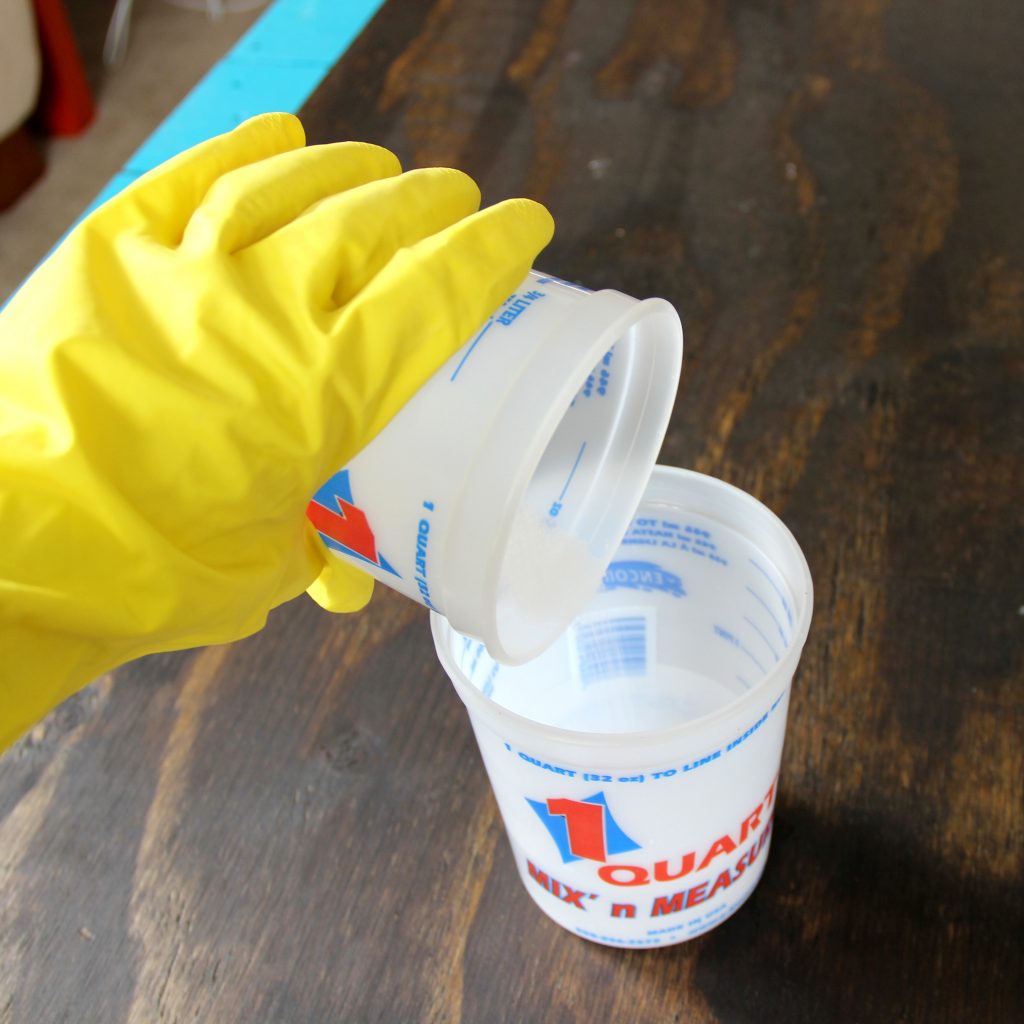
 Be sure to gear up in goggles and gloves when working with lye.  If you’re new to soap making…start here

Make your lye solution and set it to the side to cool down.  Measure out the palm kernel, coconut and shea butter and melt. 

Once the solid oils/butters are melted add the liquid oils.  Be sure to add 3 oz infused olive oil and 7 oz plain olive oil.

Add your lye water, bring the soap to trace and pour into your mold. 

I have noticed that with most natural colorants you get more vibrant colors if the soap goes through gel phase.  But you can expirament with gelling or not gelling. 

When using some natural colorants such as alkanet or annatto you run the risk of using to much that it colors the suds of the soap.  I was worried that this soap would have colored suds since it came out so dark but it actually didn’t!  Whew!

 So that was easy!  Next we’ll get a little more advanced and talk about how to make a multi-colored soap using infusions!

Happy Soaping!

Amanda

Color Soap Naturally – Infusing oil with herbs and spices

Infusing oil is probably my favorite method of using natural colorants. It works for most natural colorants but we’ll talk about the ones that do better using a different method as we go along. When you infuse oil you don’t get the grainy speckled look you get when you add spice or herb powders to traced soap.

You want to be sure to use a long shelf life oil for infusing. The top three are fractionated coconut oil, jojoba oil and olive oil. I usually stick with olive oil as all of my soap recipes contain olive oil.

There are two main methods of infusing oils.

Cold infusion –Add spices or herbs to the oil in a jar and allow to sit 2-6 weeks to infuse. If I’m infusing powdered spices or herbs I infuse 2 tablespoons in 5 oz oil. If I am using dry whole herbs then I’ll fill the jar with the herb and cover with oil. Never use fresh herbs in cold infusions as they contain water and will cause mold and bacteria to grow.

Heat infusion –Add spices or herbs to the oil and heat gently to kick start the infusion. Some spices and herbs infuse easily using the heat infusion method and you can even use the infusion the same day! You can heat using the crock pot turned to warm for 2-6 hours or low heat on the stove for 2-6 hours. You can use fresh herbs in a heat infusion if you plan on using the oil in soap making the same day. Don’t ever store away an infusion made with fresh herbs as they contain water and your infusion will grow bacteria and mold.

My favorite method is to use a hot water bath to gently heat the infusions. I seal the herbs and spices in heat sealable tea bags so I don’t have to worry about straining the infusion before I use it. I just simply remove the tea bag. Here’s how I do it.

I usually infuse 2 tablespoons of any powdered herb or spice into 5 ounces of olive oil.

Step 1 – Measure out 2 tablespoons of your powdered herb into a heat sealable tea bag.

Step 2 – Seal the edge with an iron.  Make sure it is sealed and will not come open.

Step 3 – Place the sealed teabag into the canning jar and cover with 5 oz (weight) of olive oil.

Step 4 – Screw on the lid and secure tightly.  If you’re doing many infusions at once make sure you label them so you don’t forget what they are.  I just use a permanent marker on the lid.

Step 5 – Place your jars into a pan.  Fill the pan with enough water to reach about 1” underneath the lid.  You want the water to stay plenty beneath the bottom of the jar lids.

Step 6 – Turn the heat on low and let heat for about two hours.  You can also do this in a crock pot.  Just set the crock pot on warm.

Step 7 – Remove the jars from the pan and allow them to cool away from cool air or drafts.  You don’t want the jars to break.  I typically put my jars on the counter and cover with a towel to keep out the drafts or air if it kicks on.  Check the color of your infusions.  Some herbs and spices infuse easier than others.  I noticed the alkanet, paprika, indigo, turmeric and annatto all looked nice and dark.  But some of the others looked like they needed a bit more time.  You can either heat for another hour or two or if you aren’t in a hurry to use them…let them sit somewhere out of the way for a week to get a darker infusion.

That’s it!  Wasn’t that easy?  And the best part is that since we used the tea bags to contain the spices and herbs we don’t have to bother with straining which can be a mess!

To use your infused oils simply replace a portion of olive oil in a recipe with infused olive oil.  We’ll go into more detail later on in the series. 

Happy Soaping!

Amanda