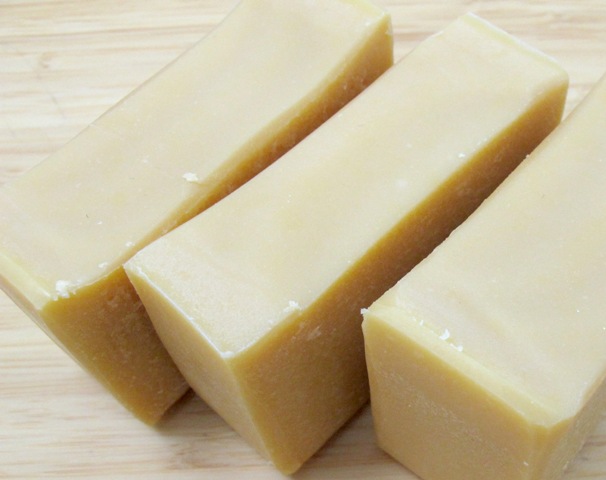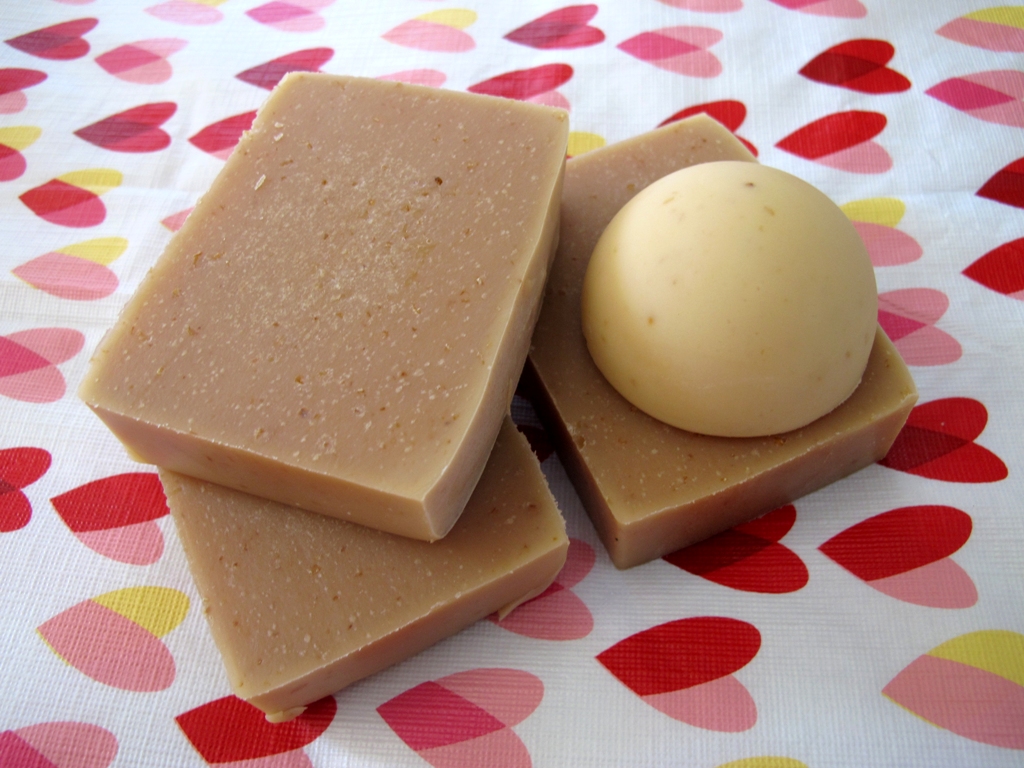
The Classic Oatmeal, Goat’s Milk and Honey Cold Process Soap – Milk in Oil Method

Oatmeal, Milk and Honey is a classic soap to make. It’s one of the first soaps that I made when I first started to make soap. This method of milk soapmaking is a bit different than the other method where we used frozen milk in the lye solution. This method uses equal amounts of lye and water for the solution and then another equal amount of milk is added to the oils. Some people find this method easier when soaping with milk. You can use this method for any type of milk including goat, cow, hemp, coconut, soy, oat…etc.

Oatmeal milk and honey soap

In standard milk soapmaking you typically freeze your milk into ice cubes and use them for your lye solution. This helps keep the temps of the lye solution down and the milk from burning. It can still cause issues such as burning and burnt fat (from the milk) leaving specs in your soap. Not always…but it can happen.

oatmeal milk and honey

In the “Milk in Oil” method…you make a lye solution with equal parts lye and water. Then you add another equal part milk to the oils before you add the lye solution. This prevents milk fat from burning in the lye solution. You also don’t have to go through the hassle of freezing your milk. For some people it is just easier to do.

I like to run my oatmeal through a mini food chopper or a coffee grinder to grind it down some.  The larger the pieces…the scratchier the soap.  I prefer instant as it is softer in the soap but you can use any kind.  I get fresh goat’s milk from another local soaper, Donna.  Learn about her goat’s here.

Let’s make soap!

The recipe:
Coconut oil – 20 oz
Olive oil – 20 oz
Rice bran oil – 5 oz
Avocado oil – 5 oz
Castor oil – 4 oz
Shea butter – 5 oz
Sweet almond oil – 5 oz
Fresh goat’s milk – 9 oz
Oatmeal – 4 tablespoons
Honey – 4 tablespoons

Sodium hydroxide – 9 oz
Water – 9.5 oz

Gear up in your goggles and gloves!  If you are new to soapmaking…visit our beginner tutorial first.

The first step is to make our lye solution.  I mention above to make the lye solution with equal parts of lye and water.  I always add a splash more because sometimes the mixture can fall out of solution if there is not enough water.  Usually equal parts is the most concentrated you should go.

Measure out the water and the lye.  Add the lye to the water and mix in a well ventilated area.

lye solutionPut that to the side.  Weigh out the shea and coconut oil and melt.

shea and coconut oilOnce melted, add all of the liquid oils to the melted oils.

melted oilsAdd 9 oz of milk to the oil mixture.

IMG_2271Next add the oatmeal.  I like to use 1 tablespoon per pound of oils.  We have 4 pounds so I added 4 tablespoons.  You can add more or less depending on your preference.

oatmealI use the same amount for honey; 1 tablespoon per pound of oils.  I added 4 tablespoons.

IMG_2277You can go ahead and your fragrance oil to the oil mixture as well.  My favorite oatmeal, milk and honey fragrance is from Bramble Berry.  I used 3 ounces.

IMG_2278

So now we have the oils, milk, honey, oats and fragrance.  Give this a good stickblend to make sure everything is well mixed.

IMG_2279Take a look at the lye solution.  You might see some floating white filmy stuff.  Give it a mix.  This is just because it is such a concentrated solution and the lye is reacting to the carbon in the air and forming sodium carbonate.  Lye (undissolved crust) stuck to the bottom of your container is bad…white floaties are not.

lye solution Add the lye solution.  Make sure you have your goggles on!

lye solution added to oilsNow it is time to stickblend!  Your mixture might turn bright orange from the lye and milk reacting.

IMG_2284IMG_2286IMG_2287Mix until trace and then pour into your mold.

IMG_2288IMG_2294IMG_2296Okay…so this soap likes to heat up.  Honey and (the sugar in) milk like to heat up when in the mold.  I prefer my soap gelled so I really have to keep an eye on it.  I cover, but I check on it every ten minutes or so.  If you don’t want your soap to gel or are afraid of overheating…you can put your soap somewhere cool like in the fridge or freezer…or even outside if its cold outside.

There is definitely a difference in color between gelled (darker) and ungelled (lighter) soap.

gelled and ungelled soapSo…some things to remember:

You can soap milk two different ways – full milk in lye solution or milk in oils as above.

Additives used:
Oatmeal – rate of 1 tablespoon PPO
Honey – rate of 1 tablespoon PPO

Happy (Goat’s) Milk Soaping!

-Amanda

Creamy carrot cold process soap

Have you been to Holly’s blog, Sparklebrook?  If not… head on over there and check out her beautiful soap.  The other day she posted a Carrots and Cream soap.  Drool.  I make a soap with carrot baby food and half and half cream.  I haven’t made it in awhile but was inspired to do so after seeing hers.  I think this will be just what my dry winter skin needs. 

Creamy carrot soap

Avocado oil – 2 oz
Castor oil – 2 oz
Shea butter – 4 oz
Coconut oil – 6 oz
Olive oil – 6 oz
Lard – 8 oz (sub with palm if you want but run through a lye calc)

Cream (half and half) – 6 oz
Sodium hydroxide – 3.7 oz
Sodium lactate – 1 oz

Carrot baby food – 2.5 oz jar (make sure the ingredients say carrots and water only)

I scented this one with an essential oil blend of lavender, lemongrass and cedarwood.  (8:2:1)

The first step when using cream or milk for soap making is to freeze the milk.  I simply pour mine in an ice tray. 

Then measure out what you need.  I used 6 oz. 

You can add the carrots to this or you can add at trace.  I’m going to go ahead and the carrots to the cream.

Slowely sprinkle in the lye as you stir…stir…stir.  Milk likes to heat up but since we froze it first…it doesn’t get too hot and burn. 

It felt like it was heating up more than I wanted so I took it over to the sink and ran some cold water over the container as I stirred. 

While that’s cooling down, measure out your solid oils.

And melt down.

Add the liquid oils to the melted oils. 

Once the oil mixture and lye water have both cooled down to where they are warm to the touch, we’re ready to make soap.  If you’re using sodium lactate add it to the lye water. 

Pour the lye solution into your oils and stickblend until trace.  Since we’re not doing a fancy design or anything you can mix to a nice thick trace. 

Pour it into the mold.

I like to gel my soap (yes, even milk/cream soap) so I covered with a piece of seran wrap and piece of wood.  Milk/cream soap does tend to heat up so if you do insulate to gel be sure you check on it quite often.  You might find that you don’t even need to insulate it to get gel.  It’s a bit cold here, so I find that I usually do.  I checked on it after about 20 minutes and you can see it started getting a bit too hot.  Notice the crack?  So I uncovered it and let it finish gelling without all of the insulation. 

Thanks, Holly for the inspiration!

Amanda